Recently, the digital imaging class was asked to complete the following task:
Answer the following questions by posting an image (or images) with captions underneath:
1.) Who invented AC electric current?
2.) What instrument did Clara Rockmore play and who invented it?
3.) who invented the term tensegrity... and what other important inventions came from this person?
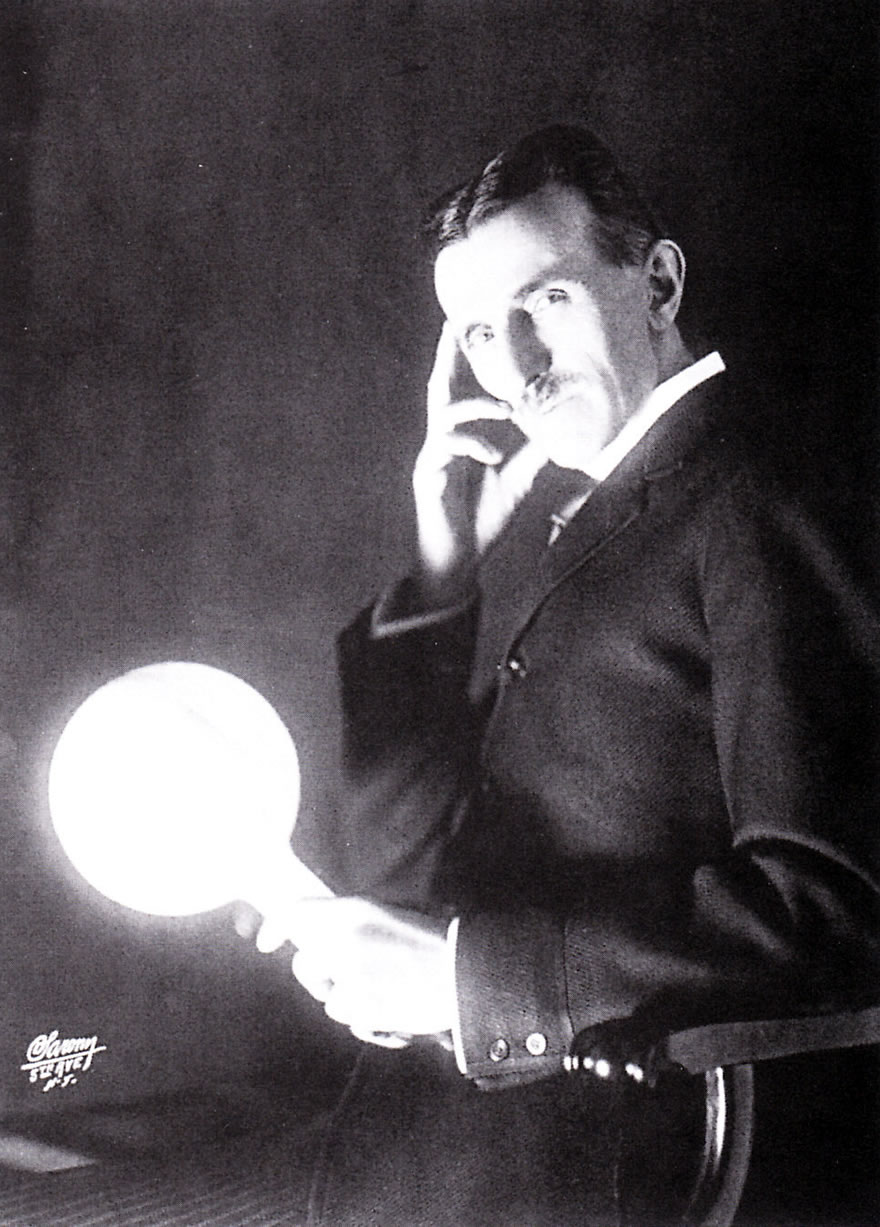
First, may I please point out that without any image, I have to give a shout-out to one of my favorite historical figures, Nikola Tesla. Tesla worked on and patented much of what formed our modern concept of alternating current, yet he almost always takes a back seat in history to Edison (his rival and former employer). Since he was really the most instrumental figure in our adoption of AC, I am choosing to use him as my answer to the first question. The only reason I am writing this here is that the internet throws out a variety of names for 'inventor of AC"... Now, back to working on the assignment as it was given.
One -
Tesla: the Little-Know Master of Electricity
Tesla Standing Atop an AC Motor - Monument at Niagara Falls
Two -
Clara Rockmore Playing the Theremin
The Man and His Machine - Leon Theremin
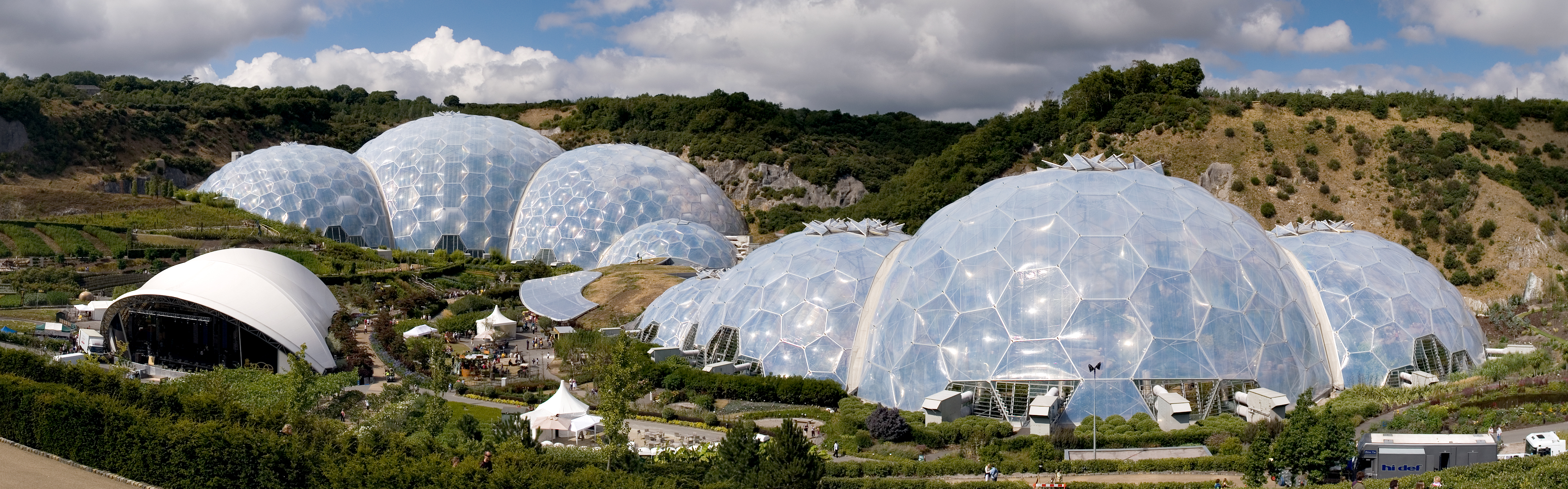
Three -
The Scientist, Turned Word-Smith
Geodesic Domes, The Eden Project, Cornwall, UK
-Kelly F.
Friday, November 25, 2011
Working on "Possibilities" - Sketch of the Invention
It will come as no surprise that I have chosen to work on the mechanical wings in my "Possibilities" project for digital imaging. Out of any of my ideas, it is the one that I have spent the most time thinking about and developing. The time has come to share these thoughts in full, as well as a quick sketch of what I think my final project will look like:
While this is a very rough sketch, it will work to give people an idea of what I am talking about. The mechanical wings would be strapped to the back of a person, and would protrude from a housing that would contain a power source, computer, and the hardware that moves the wings. I do not know what type of power source would be strong enough to move the wings, but it would have to be able to generate a lot of force and would need to be rechargeable. My design makes use of solar power film on the backs of the wings and the pack to keep the wings working.
The person would be strapped to the pack, and would have to have their legs within a frame that could be manipulated by the wearer. This frame should be comfortable, but would need to keep the wearer's legs out straight or at a good angle. Otherwise, the wearer's legs would dangle and get tossed around in the wind. Similarly the wearer's arms would need to be in a framework that strengthened them. This would allow the wearer to move their arms, without worrying about the force of air and wind whipping them everywhere.
The wings themselves would be made out of a very light but durable material, and would be manipulated by the wearer via buttons and wires connected to the hands. The wings would need to flap/beat, and should be able to rotate around the point they are connected to the pack. The wings would be independently controlled. It would be difficult, but the wings would need to be programmed to respond to very natural motions and button combinations from the wearer's hands and wrists. These motions should correspond to carefully observed wing motions from the flight of large birds (probably hawks).
Assuming the rest of this could be made to work, the acts of taking off and landing still pose a problem. If the wings could beat in such a way that the wearer slowly descends, then they could make a soft-ish landing where the leg frame absorbs the remaining shock of landing. Taking off would probably have to be accomplished by jumping from a high place. Hopefully I will come up with a different solution to that particular issue. Until and probably even after then, I will continue to develop the ideas I have set forth above.
-Kelly F.
While this is a very rough sketch, it will work to give people an idea of what I am talking about. The mechanical wings would be strapped to the back of a person, and would protrude from a housing that would contain a power source, computer, and the hardware that moves the wings. I do not know what type of power source would be strong enough to move the wings, but it would have to be able to generate a lot of force and would need to be rechargeable. My design makes use of solar power film on the backs of the wings and the pack to keep the wings working.
The person would be strapped to the pack, and would have to have their legs within a frame that could be manipulated by the wearer. This frame should be comfortable, but would need to keep the wearer's legs out straight or at a good angle. Otherwise, the wearer's legs would dangle and get tossed around in the wind. Similarly the wearer's arms would need to be in a framework that strengthened them. This would allow the wearer to move their arms, without worrying about the force of air and wind whipping them everywhere.
The wings themselves would be made out of a very light but durable material, and would be manipulated by the wearer via buttons and wires connected to the hands. The wings would need to flap/beat, and should be able to rotate around the point they are connected to the pack. The wings would be independently controlled. It would be difficult, but the wings would need to be programmed to respond to very natural motions and button combinations from the wearer's hands and wrists. These motions should correspond to carefully observed wing motions from the flight of large birds (probably hawks).
Assuming the rest of this could be made to work, the acts of taking off and landing still pose a problem. If the wings could beat in such a way that the wearer slowly descends, then they could make a soft-ish landing where the leg frame absorbs the remaining shock of landing. Taking off would probably have to be accomplished by jumping from a high place. Hopefully I will come up with a different solution to that particular issue. Until and probably even after then, I will continue to develop the ideas I have set forth above.
-Kelly F.
Potential Ideas for "Possibilities"
In our new project, "Possibilities," we have been asked to invent something new (as I mentioned in my last post). I have one idea in particular that struck me from the instant the project was announced. However, for the sake of the assignment as well as my own imagination, I have come up with the following list of three potential inventions for the project:
-Kelly F.
- Human Flying Machine (Wings) - While this concept may not have worked out too well for Icarus, I have always been fascinated with the image of a person with giant wings. This idea for an invention is my favorite of the three, simply because I have actually discussed this concept with people before. I am not an engineer, nor do I have the training necessary to know if this could actually work, but I have at least attempted to address various problems with the design. First, I know that people do not have the strength to flap a set of wings in the way that would be necessary for flight. So, my idea is basically a set of wings that are mechanically powered, controlled by motions and buttons, and large enough to actually allow the un-aerodynamic human body to fly.
- Book Holder/Light - This would be a system of mechanical arms that would hold a book in front of or above someone, without damaging the book. It would light the pages if that was necessary or required, and would turn pages for the user (again, without damaging the book!)
- Safe Book / Other Object Storage Shelf - in the same vein as the invention above, which is a new concept to me, is an old idea I have been developing for years. I am obsessive about protecting my books, and already have a fairly extensive collection. I have an idea for a bookshelf system that would protect the books (or any objects people want to put on the shelves) from fire, flood/water damage, smoke damage, earthquake, or basically any other disaster that could be imagined.
-Kelly F.
360 Degree View Around the Outside of the Box - Using 3D and 2D to Create Images
The net assignment in our digital imaging class is to invent some device or object that no one has seen before. Fortunately, this invention does not necessarily have to work in the real world. We will create a 3D model of it in Google SketchUp, and then merge this with a 2D image of ourselves using or interacting with our inventions. As inspiration for how to blend 3D graphics with 2D images, our class was shown the following video:
http://vimeo.com/7993383
This is a beautiful video, with a sense of something surreal being injected into a real occurrence. The cinematography appeals to me, because it transforms the every day into the extraordinary. It begins as any video documenting the work or antics of friends might, feeling almost thrown together and rushed. This creates immediacy and intimacy, as though the viewers are having this shared with them because they are close to the people in the film. The use occasional use of soft focus gives the impression of something spectacular, something that must be re-focused on in order to understand it. I keep returning to the idea of intimacy - what I love about this filming technique is that it makes the viewer feel like a conspirator.
My favorite part of the work, however, is the way that the boxes completely break the laws of reality and expectation, yet still seem to fit within the scene. That is precisely what I would like to accomplish with my own project - an invention that defies reality, but that is made to look plausible in real space. I suppose I am a surrealist at heart, as I may have hinted above. I like to put the impossible into action, because it fires the imagination and creates a sense of something almost like magic. The boxes accomplish this wonderfully, and I can only hope that I will manage to do so in my own image.
-Kelly F.
http://vimeo.com/7993383
This is a beautiful video, with a sense of something surreal being injected into a real occurrence. The cinematography appeals to me, because it transforms the every day into the extraordinary. It begins as any video documenting the work or antics of friends might, feeling almost thrown together and rushed. This creates immediacy and intimacy, as though the viewers are having this shared with them because they are close to the people in the film. The use occasional use of soft focus gives the impression of something spectacular, something that must be re-focused on in order to understand it. I keep returning to the idea of intimacy - what I love about this filming technique is that it makes the viewer feel like a conspirator.
My favorite part of the work, however, is the way that the boxes completely break the laws of reality and expectation, yet still seem to fit within the scene. That is precisely what I would like to accomplish with my own project - an invention that defies reality, but that is made to look plausible in real space. I suppose I am a surrealist at heart, as I may have hinted above. I like to put the impossible into action, because it fires the imagination and creates a sense of something almost like magic. The boxes accomplish this wonderfully, and I can only hope that I will manage to do so in my own image.
-Kelly F.
Further Thoughts on the Appropriation Project
We have been asked to answer the following question in relation to our appropriation artwork:
"If you had a million dollars to spend on creating your Appropriation project in real space (not only as an image built on the computer for our class), what would your final version look like, how would you construct it, what materials would you use, what size would it be, where would it be located, how would it be different than it currently is?"
The first thing I can say in answer to this question is that I would not construct my own smoke-spewing industrial park, as that would negate the environmentally conscious theme of my work. I suppose it would be possible to construct mirror-lakes in public locations near industrial sites, matching a beautiful nature scene to whatever skyline or skylines I could find.
However, if I could really do anything I wanted, I think I would pick a site in the old industrial district of a fairly large city with air-quality issues. I would then invest in air scrubbers or filters of some type, and build them into the dark steel frames of smokestacks. In order for this to still be environmentally friendly, I would have to look in to powering the gigantic air purifiers with alternative energy. I think it would at least need a combination of wind and solar power, which could be built in to the buildings and trees. It would probably require additional power, which would be as green as possible. The trees themselves would be made out of recycled glass and steel girders, and placed around my miniature industrial 'park'.
In fact, I think I would design it as a park for people to spend leisure time in. In the center of this space I would build a shallow fountain, with the image of the beautiful lake visible within it. I could build a few bridges and rock paths through it to an island in the center. There I think I would reverse my mirror images, and have an beautiful island supported by steel structures. This would have real plants and grass on it - in order for a fairly large number of people to enjoy this, the island and the park itself would have to be very large. It would have benches and other trappings common to other parks. My challenge would be to make sure that the park was still cool and inviting, even with its industrial feel. I think this project would take far more than one million dollars, but it would be interesting. It would be working to clean up the air in this city, and it would provide a park that makes a point about the environment. So, if I were allowed to build my project in three dimensions (and was given a very large budget), this is how I would proceed.
-Kelly F.
"If you had a million dollars to spend on creating your Appropriation project in real space (not only as an image built on the computer for our class), what would your final version look like, how would you construct it, what materials would you use, what size would it be, where would it be located, how would it be different than it currently is?"
The first thing I can say in answer to this question is that I would not construct my own smoke-spewing industrial park, as that would negate the environmentally conscious theme of my work. I suppose it would be possible to construct mirror-lakes in public locations near industrial sites, matching a beautiful nature scene to whatever skyline or skylines I could find.
However, if I could really do anything I wanted, I think I would pick a site in the old industrial district of a fairly large city with air-quality issues. I would then invest in air scrubbers or filters of some type, and build them into the dark steel frames of smokestacks. In order for this to still be environmentally friendly, I would have to look in to powering the gigantic air purifiers with alternative energy. I think it would at least need a combination of wind and solar power, which could be built in to the buildings and trees. It would probably require additional power, which would be as green as possible. The trees themselves would be made out of recycled glass and steel girders, and placed around my miniature industrial 'park'.
In fact, I think I would design it as a park for people to spend leisure time in. In the center of this space I would build a shallow fountain, with the image of the beautiful lake visible within it. I could build a few bridges and rock paths through it to an island in the center. There I think I would reverse my mirror images, and have an beautiful island supported by steel structures. This would have real plants and grass on it - in order for a fairly large number of people to enjoy this, the island and the park itself would have to be very large. It would have benches and other trappings common to other parks. My challenge would be to make sure that the park was still cool and inviting, even with its industrial feel. I think this project would take far more than one million dollars, but it would be interesting. It would be working to clean up the air in this city, and it would provide a park that makes a point about the environment. So, if I were allowed to build my project in three dimensions (and was given a very large budget), this is how I would proceed.
-Kelly F.
First Project Reflection - Appropriation Image
After many hours working on this project, I have completed my first digital image:
I have titled the piece Clouds: Upside Down. Looking at the finished product, I cannot help but think about the process that led me to it. It was fairly smooth overall, but I did encounter a few snags. My main problem at first was the fact that I was not willing to adapt my original idea. I wanted it to turn out about like this, especially with the strong orange palette of the industrial (right-side up) world in the image. However, I wanted my idealistic mountain lake scene to be in color. I wanted the setting sun in the industrial portion to be mirrored by a rising sun in the mountains.
This goes to show, sometimes the best thing for a piece of art is to finally accept one's circumstances. I kept trying to force the image into what I mentioned above. I could not find pictures that would go together, no matter what I did. Finally, I gave up and converted the mountains to black and white. This not only made the images work together, but also I think it does a lot to help the message of the piece. The variety of grey tones sets the mountain scene apart from the silhouetted, sinister industrial landscape. It effectively communicates how upside-down the landscape is in reality, and how unfortunate such a world would be.
My favorite part of the process was when I finally let go of my first vision, and brought all of the pieces above together. Once I had these elements, I could really see what my image would become. All that was necessary at that point was making sure the various images worked together visually, which is something I find incredibly satisfying. Seeing any artwork come together is exciting, and once I reached the point where I was considering lighting effects I knew that I was close to being finished. I am very satisfied with how this project turned out, and I cannot wait until we begin our next assignment.
-Kelly F.
Video Parody - Appropriation in Music
After watching the video for Weird Al's "Perform This Way" ( parody of Lady Gaga's "Born This Way"), our class was given the task of finding a music video that featured appropriation. This assignment might seem easy, given the wide-spread popularity of music video parodies on the internet, but it actually gave me a few moments of pause. There are a lot of bad parodies out there, as well as a lot that fall in the 'okay' category. However, it takes true artistry to measure up to that master of musical appropriation, Weird Al. After several searches, I finally found a video that did a very good job of adapting a song that has been popular of late: Eminem's "Not Afraid".
I've never liked or listened to much rap, but I have managed to hear this on the radio at some point. Here's a link to the original video by Eminem (*WARNING - this is Eminem - there ARE explicit lyrics, in case you find these offensive):
Now, here's a link to the parody video, "I Am Afraid" by the comedic minds at CollegeHumor:
This video gives one a glimpse into a wide range of paranoid fears and downright phobias. It's delightfully funny, and plays off of the original tune and visual sequences in Eminem's video. I would recommend giving the video a watch. As with many parodies, it puts a spotlight on the original video and allows one to view it in a new light, while also giving people new material to think and laugh about. In the end, saying something new while retaining a relationship with the past is what appropriation is all about.
-Kelly F.
I've never liked or listened to much rap, but I have managed to hear this on the radio at some point. Here's a link to the original video by Eminem (*WARNING - this is Eminem - there ARE explicit lyrics, in case you find these offensive):
Now, here's a link to the parody video, "I Am Afraid" by the comedic minds at CollegeHumor:
This video gives one a glimpse into a wide range of paranoid fears and downright phobias. It's delightfully funny, and plays off of the original tune and visual sequences in Eminem's video. I would recommend giving the video a watch. As with many parodies, it puts a spotlight on the original video and allows one to view it in a new light, while also giving people new material to think and laugh about. In the end, saying something new while retaining a relationship with the past is what appropriation is all about.
-Kelly F.
Subscribe to:
Posts (Atom)